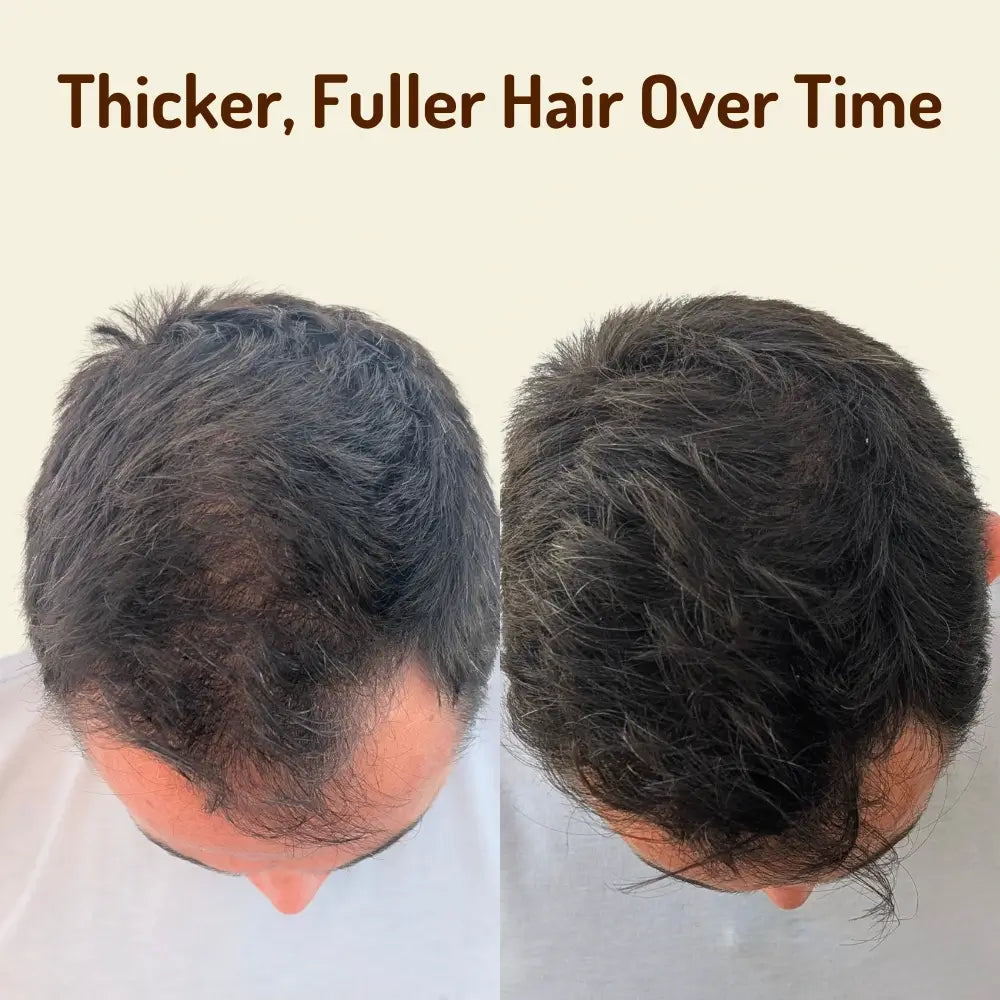
Does Red Light Therapy Regrow Hair?
Red light therapy, often referred to as low level light therapy, can increase hair density and improve hair count measurements in androgenetic alopecia in multiple randomized controlled trials when used consistently over several months. (1)(2)(3) It is best understood as a supportive treatment that helps stimulate follicles and slow progression rather than a guaranteed reversal of genetic hair loss for everyone. (1)(2)
NOTE: For a deeper technical explanation of how light therapy works at the cellular level, see our overview of low level light therapy.
What People Mean by Regrow Hair
When people ask whether red light therapy regrows hair, they usually mean one of three outcomes:
Increased hair density, meaning more visible hair in a given area
Thicker terminal hairs, meaning improved caliber of existing hairs
Slower shedding or slower progression of pattern thinning
Clinical studies most commonly measure changes in hair count and hair density rather than complete restoration of a juvenile hairline. (2)(3)
What The Clinical Evidence Shows
Randomized controlled trials have reported statistically significant improvements in hair counts in men and women with androgenetic alopecia using red light devices versus sham controls. (4)(5)
A randomized double blind sham controlled helmet type device study also reported significant increases in hair density and described the treatment as safe and effective under the study protocol. (6)
Systematic reviews and meta analyses focusing on FDA cleared home use devices conclude that low level light therapy improves hair density compared with sham devices, supporting that the effect is real under studied protocols. (3)
These findings are consistent across multiple trials, but results vary by individual and depend strongly on consistent use. (1)(2)(3)
How Red Light Therapy Is Thought to Work
Photobiomodulation research suggests that red and near infrared light can influence cellular metabolism and signaling, including effects linked to mitochondrial function. (1)(2) In hair focused research, mechanisms discussed include stimulation of follicular activity and changes in the scalp tissue environment that may favor the growth phase of the hair cycle. (1)(2)
Mechanistic studies using hair follicle models also support biological plausibility for red light influencing follicle activity. (7)
This is not the same as heat based or ablative lasers. The intent is cellular modulation at low intensities rather than tissue damage. (1)(2)
NOTE: To understand how specific wavelengths influence tissue penetration and clinical outcomes, see our analysis of what wavelength works best for hair growth.
Who Is Most Likely to Benefit
Evidence is strongest for androgenetic alopecia, meaning male pattern or female pattern hair loss. (1)(2)(3)
In general, outcomes are more favorable when:
- Hair thinning is early to moderate rather than long established bald areas
- Follicles are miniaturizing but still present
- Use is consistent for months, not weeks (2)(3)(6)
If follicles are no longer active in an area, light therapy is less likely to produce visible regrowth there. (1)(2)
How Long Does It Take to See Results
Hair grows in cycles, so visible changes are not immediate. Red light therapy works by influencing biological processes within the follicle, and those processes unfold gradually over time.
Most controlled clinical trials measure changes at 12 and 24 weeks, with more meaningful improvements typically observed closer to the 24 week mark under consistent use. (2)(3)(6).
Many people only begin judging visible progress after 3 to 6 months, because trial endpoints commonly fall within that timeframe.
Stopping treatment after only a few weeks is unlikely to produce measurable change. As with most hair loss interventions, consistency and patience are important factors in evaluating results.
What Red Light Therapy Can and Cannot Do
What it can do, for many users with pattern hair loss:
- Support measurable improvements in hair counts and density under studied protocols (3)(4)(5)(6)
- Help maintain hair and support follicle activity over time (1)(2)
What it cannot promise:
- Guaranteed regrowth for every person
- Full restoration in advanced loss where follicles are no longer active (1)(2)
The most credible framing is improvement and support, not a cure.
How It Fits With Other Hair Loss Approaches
Some reviews discuss low level light therapy as a potential adjunct alongside established treatments, depending on individual context. (2) This page is educational and does not replace medical advice. If you are using prescription treatments or have scalp conditions, a clinician can help you determine what combination is appropriate.
How to Evaluate Red Light Hair Claims Responsibly
Look for:
Human randomized controlled trials or meta analyses in androgenetic alopecia (3)(4)(5)(6)
Clear protocol information, including frequency and duration (2)(3)
Transparent device parameters rather than vague marketing terms (2)
Be cautious with claims that focus on a single specification or promise fast regrowth.
NOTE: For a technical breakdown of energy delivery and dosing, read our minimum irradiance guide.
Frequently Asked Questions
Does red light therapy regrow hair or just prevent loss?
Clinical trials show it can improve measurable hair counts and density in androgenetic alopecia, which can translate into visible improvement for many people. (3)(4)(5)(6) It is also commonly positioned as supportive for maintenance and slowing progression rather than a guaranteed full reversal. (1)(2)
How long do I need to use it before I know if it works?
Most controlled trials measure changes at 12 to 24 weeks, with more meaningful results generally seen closer to 24 weeks of consistent use. (2)(3)(6)
Does it work for both men and women?
Yes. Studies including both male and female pattern hair loss show measurable improvements in hair count (2)(4)(5)(6)
If it works, do results last if I stop?
Most hair loss treatments require ongoing maintenance. If treatment stops, the underlying pattern hair loss process continues, and gains may diminish over time. Reviews commonly frame LLLT as a supportive ongoing therapy. (1)(2)(3)
References
(1) Avci P et al. Low Level Laser Light Therapy for Treatment of Hair Loss. Lasers in Surgery and Medicine. 2014. PMC3944668.
(2) Pillai JK et al. Role of Low Level Light Therapy in Androgenetic Alopecia. Journal of Cutaneous and Aesthetic Surgery. 2021. PMC8906269.
(3) Lueangarun S et al. Low Level Laser Therapy for Pattern Hair Loss. Systematic Review and Meta Analysis. 2021. PubMed 34980962.
(4) Lanzafame RJ et al. The Growth of Human Scalp Hair Mediated by Visible Red Light Laser and LED Sources in Males with Androgenetic Alopecia. Lasers in Surgery and Medicine. 2014. PubMed 24078483.
(5) Lanzafame RJ et al. The Growth of Human Scalp Hair in Females Using Visible Red Light Laser and LED Sources. Lasers in Surgery and Medicine. 2014. PubMed 25124964.
(6) Yoon JS et al. Helmet Type Low Level Light Therapy for Androgenetic Alopecia. Randomized Double Blind Sham Controlled Trial. 2020. PMC7373546.
(7) Yang K et al. Hair Growth Promoting Effects of 650 nm Red Light Stimulation on Human Hair Follicles. 2021. PMC8577899.


RootRevival Crown - The red light therapy cap built for men noticing early crown thinning.
RootRevival Crown - The red light therapy cap built for men noticing early crown thinning.
Couldn't load pickup availability