Minimum Irradiance Needed for Hair Growth
Irradiance is the amount of light power delivered per unit area of tissue, typically measured in milliwatts per square centimetre. In red light therapy for hair growth, irradiance helps determine whether enough light reaches the scalp to produce a biological response. Wavelength determines the type of light used. Irradiance helps determine how much light is delivered at the surface. (2)
There is no single universally accepted minimum irradiance threshold for hair growth. Published values vary based on device design, measurement method, scalp contact, and session duration. For that reason, irradiance is best understood alongside total energy dose and treatment protocol, not as a standalone headline number. (1) (5)
NOTE: For the cellular mechanism and clinical context, read our low level light therapy overview.
What Is Irradiance in Red Light Therapy?
Irradiance, also called power density, describes the rate at which light energy is delivered to a surface area. It is usually expressed as milliwatts per square centimetre. (5)
In practice, irradiance is only one part of dosing. Total energy dose depends on both irradiance and time, and is commonly expressed as joules per square centimetre. (5)
Why Irradiance Matters for Hair Follicles
Hair follicles sit below the skin surface. Light reaching the scalp surface is not the same as light reaching the follicle, because tissue absorbs and scatters photons. That is one reason why reported irradiance values differ across studies and devices. (1) (2)
This is also why comparing devices using raw output claims can be misleading unless measurement conditions are clearly stated. (5)
Why A Minimum Number Is Hard To Define
Clinical studies do not all measure irradiance in the same way. Some report estimated scalp exposure, others report device output under specific conditions, and many focus on treatment protocol and outcomes rather than detailed optical mapping. (1) (3)
Because of that, a more responsible way to interpret the evidence is:
Look at what ranges and dosing approaches have been used in controlled studies
Then evaluate devices based on whether their stated parameters are measured and documented under comparable conditions (3) (5)
How Irradiance and Time Work Together
Total energy dose can be expressed as:
Energy dose (J/cm²) = Irradiance (mW/cm²) × Time (seconds) ÷ 1000 (5)
This means a lower irradiance used for longer can deliver a similar total dose to a higher irradiance used for shorter. Treatment time and frequency matter just as much as intensity. (5)
Biphasic Dose Response
Photobiomodulation research often describes a biphasic dose response. Low doses can stimulate beneficial effects, while higher doses do not necessarily improve results and can reduce the desired response. (4)
This is one reason why maximum power output is not a reliable proxy for effectiveness. Evidence based protocols focus on appropriate dosing and consistency. (4) (5)
What The Clinical Evidence Supports
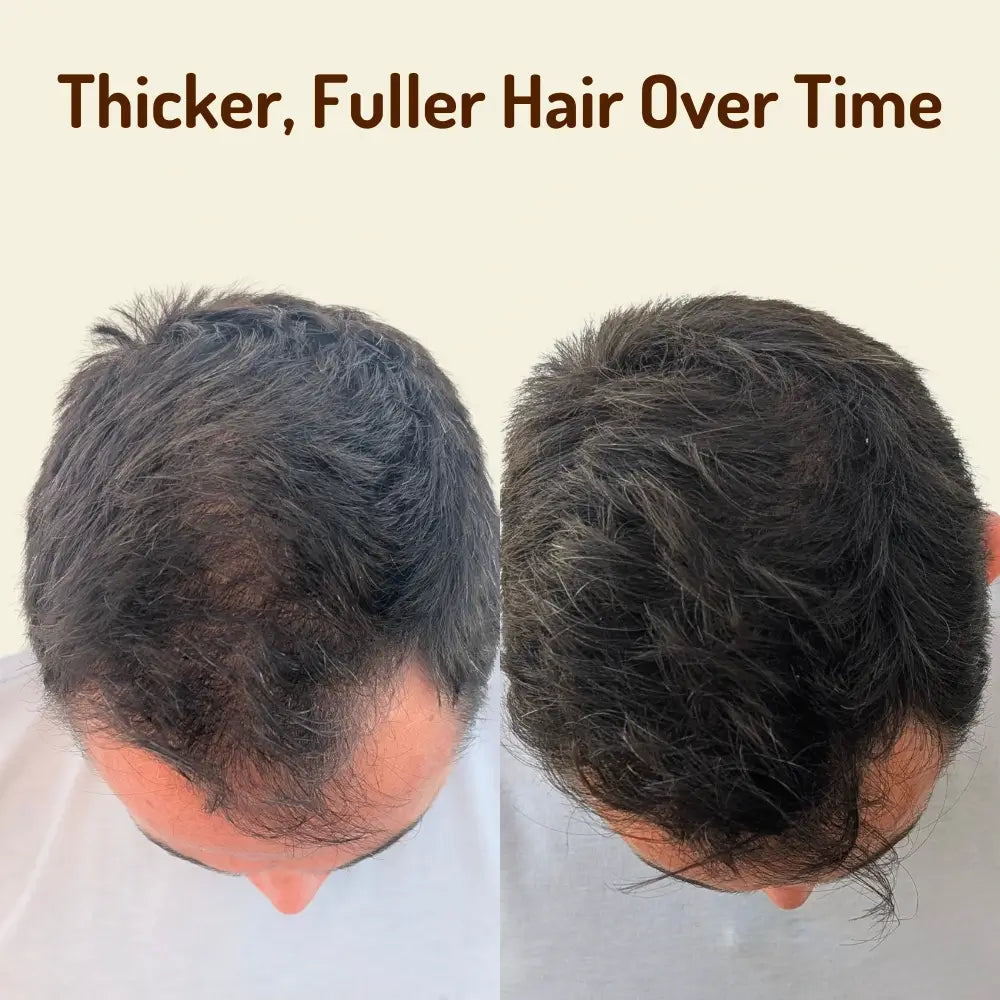
Randomized controlled trials and reviews suggest that low level light therapy can improve hair density measures in androgenetic alopecia when used consistently over weeks to months. (6) (7) (8)
Systematic reviews and meta analyses of FDA cleared home use devices also report statistically significant improvements in hair density compared with sham devices, supporting that LLLT can be effective under studied protocols. (3)
Important limitations remain. Outcomes vary by individual, device configuration, adherence, and baseline severity. (1) (3)
How to Evaluate Irradiance Claims in Hair Growth Devices
When a device claims a specific irradiance, ask:
Was it measured at scalp contact or at the diode aperture
At what distance was it measured
What sensor area was used
Is it peak, average, or mapped across the treatment area
Is session duration specified so total dose can be estimated (5)
If those details are missing, the number is not usable for comparison.
Practical Device Evaluation Framework
A practical way to evaluate a hair growth light device is:
Wavelength transparency and consistency with published studies (1) (2)
Dose transparency, meaning irradiance and time are measurable and defined (5)
Protocol clarity, meaning session duration and weekly frequency are stated (3)
Evidence quality, meaning the device type has been studied in controlled trials or is comparable to studied devices (3) (6) (8)
Frequently Asked Questions
What is the minimum irradiance needed for hair growth?
There is no single universally accepted minimum value because studies and devices use different measurement methods and protocols. A more reliable approach is to evaluate irradiance together with exposure time and the overall dosing protocol used in clinical research. (1) (5)
Is higher irradiance always better?
No. Photobiomodulation can show a biphasic response where too little does nothing and too much does not improve results and may reduce the desired effect. (4)
Why do different brands report very different irradiance numbers?
Often because they measured in different ways, at different distances, using different sensors, and sometimes report peak output rather than average scalp exposure. Without measurement conditions, comparisons are unreliable. (5)
Should I judge a device only by irradiance?
No. Wavelength, total dose, session duration, frequency, and consistency all matter. Clinical evidence is based on protocols, not single numbers. (3) (5)
References
(1) Avci P et al. Low Level Laser Light Therapy for Treatment of Hair Loss. 2013. PMC3944668
(2) Pillai JK et al. Role of Low Level Light Therapy in Androgenetic Alopecia. 2021. PMC8906269
(3) Lueangarun S et al. Systematic review and meta analysis of FDA cleared home use LLLT devices for pattern hair loss. 2021. PubMed 34980962
(4) Huang YY et al. Biphasic dose response in low level light therapy. 2009. PMC2790317
(5) Zein R et al. Review of light parameters and photobiomodulation efficacy. 2018. PMC8355782
(6) Lanzafame RJ et al. Male RCT visible red light laser and LED sources. PubMed 24078483
(7) Lanzafame RJ et al. Female RCT visible red light laser and LED sources. PubMed 25124964
(8) Yoon JS et al. Helmet type device randomized double blind clinical trial. 2020. PMC7373546


RootRevival Crown - The red light therapy cap built for men noticing early crown thinning.
RootRevival Crown - The red light therapy cap built for men noticing early crown thinning.
Couldn't load pickup availability